
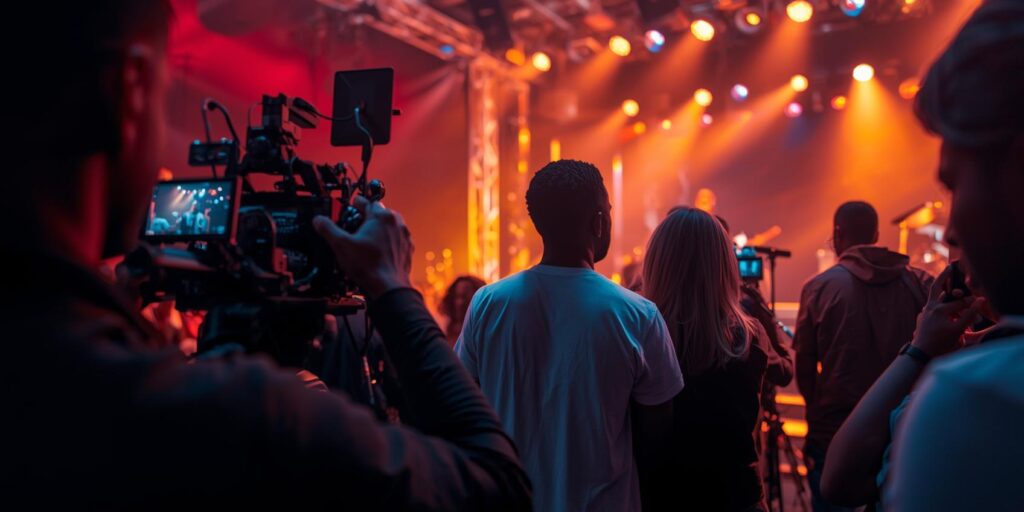
The most powerful content from your event often comes from genuine stories of transformation and impact. Plan intentionally to capture these moments.
Set up a testimony recording station in a quiet area with good lighting, a simple attractive background, and quality audio equipment. Staff it with someone warm and skilled at making people comfortable on camera. Promote this station throughout your event and make it easy for people to share their stories.
Prepare interview questions that draw out meaningful responses. Instead of “What did you think of the event?” ask “What’s one thing you heard today that you’re going to carry with you?” or “How has God been speaking to you during this experience?” Specific questions generate specific, usable answers.
Capture both formal sit-down interviews and casual on-the-street style reactions. Formal testimonies provide polished content for promotional use. Casual reactions captured throughout the event feel authentic and immediate. Both have value.
Get proper releases signed by anyone you interview on camera. Have simple media release forms ready that give you permission to use their likeness and words in promotional materials. This protects you legally and ensures you can freely use the content you capture.
Don’t wait to edit and share testimonies. Some of the most compelling content can be edited quickly and shared while the event is still happening or immediately after. This real-time sharing creates momentum and FOMO for future events.
All your planning comes down to smooth execution when the event actually happens. A few key practices ensure everything runs as smoothly as possible.
Hold a media team meeting before doors open. Walk through the schedule together, confirm everyone’s assignments, address any last-minute changes, pray together for excellent work and kingdom impact, and ensure everyone has contact information for communication during the event.
Use a reliable communication system among team members. Walkie-talkies or a group messaging app keep everyone coordinated. The media director needs to communicate with camera operators about shot priorities, alert the social media team to shareable moments, coordinate with the audio team about any issues, and update the streaming technician about schedule changes.
Stay flexible and adaptable when things don’t go according to plan-and something always doesn’t go according to plan. Trains your team to solve problems creatively, capture what’s actually happening rather than mourning the perfect shot you planned, and maintain professionalism even when stressed. Your team’s adaptability often determines the quality of content more than your preparation.
Document behind-the-scenes moments throughout the day. Some of the most engaging content comes from showing the work that goes into creating the event-team members setting up, sound checks, speaker preparations, and volunteer coordination. This content humanizes your ministry and builds appreciation for future events.
Take care of your media team physically and emotionally. Ensure they have access to food and water, schedule breaks when possible, check in on how they’re doing, protect them from unreasonable demands from other team members, and express genuine appreciation for their work. A well-cared-for team does better work.
Your event doesn’t end when the last attendee leaves. The post-event phase is where you multiply impact and set up success for future initiatives.
Begin editing and sharing content immediately while excitement is still high. Post a quick highlight reel within 24-48 hours, share favorite moments and quotes throughout the following week, release full session recordings on a predictable schedule, and create a comprehensive recap that celebrates the event’s success. Strike while the iron is hot—delayed content loses impact.
Organize and archive all content systematically. Create a master folder with all raw footage, edited content, photos, graphics, and documentation. Tag and name files clearly for easy retrieval later. Back everything up in multiple locations. This organization allows you to repurpose content for years to come.
Analyze your metrics and gather feedback to understand what worked and what didn’t. Review attendance numbers versus goals, examine social media reach and engagement, assess streaming viewership and watch time, survey attendees about their experience, and debrief with your media team about successes and challenges. Honest evaluation makes your next event better.
Create evergreen content from your event that continues serving people long-term. Turn key teaching sessions into standalone resources, compile testimonies into an inspiring video, design quote graphics from memorable moments, write blog posts expanding on themes from the event, and develop study guides or discussion questions based on content. Your event becomes an asset that keeps giving.
Use event content strategically in future marketing. Your next event is easier to promote when you can show compelling footage from this one. Testimonies become powerful social proof. Photos demonstrate the atmosphere and experience people can expect. Every event builds credibility and momentum for what comes next.